How to Reduce Workplace Injuries by 50 Percent: Proven Strategies

- Published On:
- Safety Observations
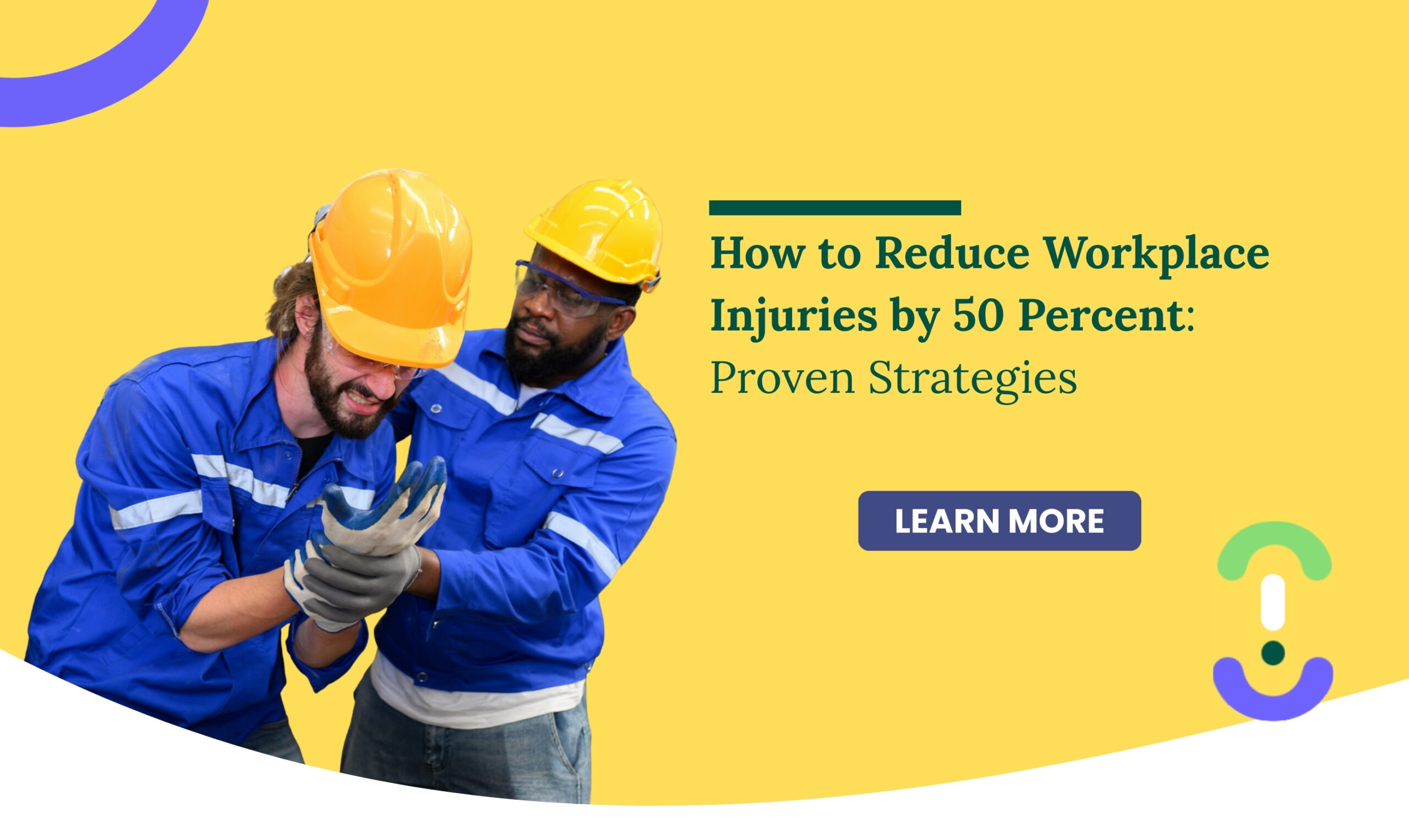
Workplace injuries create significant operational and financial strain for manufacturing plants, construction sites, warehouses, and industrial facilities. Direct costs from medical expenses and workers’ compensation claims add up quickly, while indirect costs from lost productivity, replacement worker training, and schedule disruptions affect daily operations.
For operations managers and safety leaders managing frontline teams, reducing workplace injuries requires systematic approaches that address root causes rather than surface symptoms. Organizations that implement comprehensive injury prevention strategies consistently achieve significant reductions in incident rates and associated costs.
Understanding Workplace Injury Causes
Before implementing prevention strategies, safety coordinators and operations leaders must understand common injury causes. Most workplace injuries fall into predictable categories that targeted interventions can address.
According to the Bureau of Labor Statistics (BLS), private industry employers reported 2.6 million nonfatal workplace injuries and illnesses in 2023.
The most common injury events include:
- Overexertion and bodily reaction from lifting, pushing, pulling, or repetitive motions are common in warehouse and manufacturing environments
- Contact with objects and equipment, including being struck or caught in machinery on production floors
- Slips, trips, and falls on walking surfaces or from heights at construction sites and facilities
- Exposure to harmful substances or environments in chemical and industrial operations
- Transportation incidents involving forklifts, delivery vehicles, and material handling equipment in logistics operations
- Inadequate machine guarding leading to contact with moving parts, pinch points, and rotating equipment
- Poor housekeeping creates obstacles, spills, and cluttered walkways in production and warehouse areas
- Fatigue-related errors from extended shifts, insufficient breaks, or demanding physical tasks
- Improper manual handling techniques when moving heavy materials without proper training or equipment
Understanding common mistakes in health and safety management systems helps EHS managers identify gaps in current prevention efforts.
Proven Injury Prevention Strategies
Effective injury prevention requires multiple coordinated interventions rather than single solutions. The following strategies have demonstrated measurable results across manufacturing, construction, warehousing, and industrial operations.
Hazard Identification and Assessment
Systematic hazard identification forms the foundation of injury prevention. Plant managers and safety coordinators cannot prevent injuries from hazards that remain unidentified during daily operations.
Effective hazard identification includes:
- Regular workplace inspectionsare conducted at scheduled intervals across all shifts
- Job hazard analysis for tasks with injury history or high-risk potential
- Employee hazard reporting systems that encourage frontline worker input
- Near-miss investigation to identify hazards before injuries occur
The Occupational Safety and Health Administration (OSHA) recommends that employers conduct routine inspections and involve workers in hazard identification processes. Operations teams can use job safety analysis software to systematically evaluate task-specific risks.
Engineering Controls
Engineering controls eliminate or reduce hazards at the source, providing more reliable protection than administrative measures or personal protective equipment alone.
Examples of engineering controls for industrial environments include:
- Machine guarding to prevent contact with moving parts on production lines
- Ergonomic workstation design to reduce strain and repetitive motion injuries in assembly and packaging areas
- Ventilation systems to control airborne contaminants in manufacturing and chemical facilities
- Anti-fatigue flooring and improved lighting in warehouse and distribution centers
Operations leaders focused on ergonomic improvements can benefit from understanding industrial ergonomics fundamentals and implementing systematic assessment processes.
Administrative Controls and Safe Work Practices
Administrative controls establish procedures and policies that reduce injury exposure. While less effective than engineering controls, administrative measures provide important additional protection layers for frontline teams.
Key administrative controls include:
- Standard operating procedures for high-risk tasks across shifts and locations
- Job rotation to reduce repetitive strain exposure in manufacturing and warehouse roles
- Work scheduling that prevents fatigue-related errors during extended operations
- Clear signage and labeling for hazardous areas and materials
Safety Training and Competency Verification
Effective training ensures employees possess the knowledge and skills needed to work safely. Training coordinators and HR leads should ensure programs address specific hazards employees encounter in actual job tasks.
Training effectiveness depends on:
- Job-specific content addressing actual workplace hazards for each role
- Hands-on practice rather than passive information delivery
- Competency verification confirming skill demonstration
- Regular refreshers maintain awareness over time
Selecting appropriate worker certification and training software helps organizations track completion and manage certification requirements for regulatory compliance.
Incident Investigation and Root Cause Analysis
Every incident provides information that can prevent future injuries. EHS managers and safety coordinators must conduct thorough investigations that identify root causes rather than stopping at surface-level explanations.
Effective investigation practices include:
- Immediate response to secure the scene and provide care
- Systematic fact-gathering through interviews and evidence collection
- Root cause analysis using structured methodologies
- Corrective action implementation with follow-up verification
The National Institute for Occupational Safety and Health (NIOSH) provides resources for investigating workplace injuries and implementing evidence-based prevention measures. Safety teams can streamline investigation workflows using root cause analysis management software.
Advantages of Systematic Injury Prevention
Organizations that implement comprehensive injury prevention programs experience multiple operational benefits:
- Reduced direct costs from medical expenses and workers’ compensation claims
- Lower indirect costs, including lost productivity and replacement worker training
- Improved employee morale when frontline workers feel protected and valued
- Better regulatory compliance with fewer OSHA citations and penalties
- Enhanced operational continuity with fewer disruptions from injury-related absences
Risks and Challenges
Implementing injury prevention strategies involves potential challenges for operations and safety teams:
- Resource requirements for training, equipment, and process changes
- Resistance to change from employees accustomed to existing practices
- Inconsistent application across shifts, departments, or facility locations
- Data quality issues that limit trend identification and progress measurement
- Competing priorities when production demands conflict with safety initiatives
Measuring Injury Prevention Progress
Tracking the right metrics helps plant managers and safety coordinators evaluate whether prevention strategies produce results.
Lagging indicators measure outcomes after events occur:
- Total Recordable Incident Rate (TRIR)
- Days Away, Restricted, or Transferred (DART) rate
- Workers’ compensation costs
Leading indicators measure prevention activities:
- Inspection completion rates across all locations
- Hazard reports submitted and resolved
- Training completion percentages
- Safety observation frequency
Digital Tools for Injury Prevention
Manual tracking through spreadsheets createsan administrative burden and limits visibility into safety performance across multiple sites or shifts. Digital systems support injury prevention through:
- Centralized hazard reporting enables faster identification and response from any location
- Automated inspection scheduling ensures consistent monitoring across facilities
- Real-time dashboards showing safety metrics across locations for operations leaders
- Corrective action tracking with accountability and follow-up
Knowella’s Health & Safety Management solution helps organizations digitize safety processes, track incidents, and maintain compliance documentation through streamlined digital workflows.
Building a Safer Workplace
Reducing workplace injuries requires systematic hazard identification, engineering controls, effective training, and thorough incident investigation. Operations managers and safety leaders who implement comprehensive prevention programs address root causes rather than surface symptoms.
Knowella’s Health & Safety Management solution supports incident tracking, hazard reporting, and compliance documentation through digital workflows.
Get started for free or book a demo to see how the platform works.
Frequently Asked Questions
Systematic hazard identification combined with engineering controls provides the strongest injury prevention foundation. Administrative controls and training add additional protection.
Most organizations see measurable improvement within 6 to 12 months of implementing comprehensive prevention programs.
Agriculture, construction, transportation, and manufacturing consistently report higher injury rates according to BLS data.
Leading indicators measure prevention activities like inspections and training completion, identifying gaps before injuries occur.
Frontline employees who participate in hazard identification and safety committees contribute valuable operational knowledge and follow procedures more consistently.
Compare incident rates before and after implementing prevention strategies, then divide the difference by the baseline rate.
Our tailored solutions address your industry’s distinct challenges, fostering growth and compliance.

Your Journey Starts with Knowella
Revolutionize your operations today with Knowella. Experience unparalleled efficiency, safety, and quality as you empower
your teams with the tools to excel. Elevate your business to new heights; explore Knowella now.
Proven injury prevention strategies help reduce workplace injuries. See actionable methods that prevent accidents and improve safety outcomes.

Learn remote work safety requirements, employer responsibilities, and home office compliance strategies to protect distributed workers.

All articles Go back Operations leaders evaluating safety management software need a structured approach to quantify financial returns before committing budget. A Return on Investment